
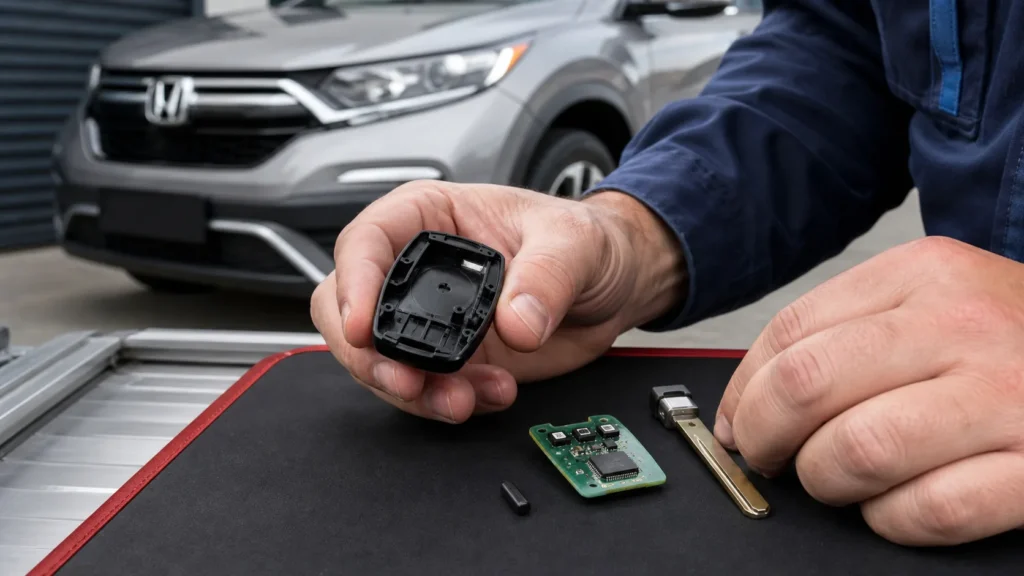
A transponder key combines a mechanically cut key blade with an electronic component that the vehicle must recognise. When either part is damaged, worn or no longer communicating as expected, the result can look like a simple key problem even though several checks may be needed. The safest first step is to note exactly what the vehicle and key are doing rather than repeatedly forcing the key or trying unverified programming instructions.
What are common signs of a transponder key problem?
A vehicle may crank without starting, display a key or security warning, intermittently recognise one key but not another, or respond differently after the key casing has been dropped or opened. A worn blade can also make the key difficult to turn even when the electronic component is working. These symptoms do not identify one guaranteed cause, so the vehicle make, model, year and key system must be checked before a replacement or programming path is confirmed.
How can a spare key help with diagnosis?
If an authorised spare key starts and operates the vehicle normally, that comparison can help separate a problem with one key from a broader vehicle issue. If neither authorised key works, the cause may sit elsewhere and require a different automotive specialist. Do not repeatedly dismantle working keys simply to compare components; small parts and seals can be damaged or misplaced.
Can a damaged casing cause trouble?
Yes. A cracked shell, loose battery contact or damaged button pad can affect remote functions, while the immobiliser component may still be separate from the remote battery. On some systems a flat remote battery affects locking buttons but not starting; on others the behaviour differs. That is why we check your exact vehicle and key type before recommending a new shell, remote or complete key.
Is key cutting the same as key programming?
No. Cutting creates the physical blade profile. Programming or registration relates to the electronic key system. Some replacement jobs need both steps, while others may need only one. Our car key cutting and programming service explains the combined process and the details needed to confirm availability for a particular vehicle.
What details should you provide before booking?
- Vehicle make, model and year
- Whether any authorised key still works
- Whether the issue affects starting, remote buttons, the physical lock or more than one function
- A clear photo of the existing key, if available
- Your Melbourne or Geelong service location
Proof of ownership and identification may be required before key work proceeds. This protects vehicle owners and helps ensure the correct vehicle and key system are being discussed.
When might a replacement key be the practical option?
Replacement may be appropriate when the blade is badly worn, the housing is damaged, the internal component cannot be reused safely, or no working key remains. Availability still depends on the make, model, year and key system. See our car key replacement information for the service process and preparation checklist.
What should you avoid doing?
Avoid forcing a key that will not turn, gluing a damaged housing around moving parts, swapping unverified electronic components, or following generic procedures that are not specific to the vehicle. These actions can make the original fault harder to identify. Keep all pieces of a damaged key and any working spare together for assessment.
How can Ostan Locksmiths help?
Ostan Locksmiths provides mobile car key replacement, cutting and programming across Melbourne and Geelong for most makes and models. Call 0410 380 354 or email [email protected] with the vehicle details and symptoms. We will explain whether the requested work is available before a booking is arranged.